Learn which foods to avoid for weight loss, including sugary drinks, refined carbs, and processed meats, and find healthier alternatives to boost your progress.

When people start their weight loss journey, they often focus heavily on exercise—especially cardio—while overlooking the role of nutrition. But through my own experience of losing 20kg, I learned that what you eat is far more important than how much you work out. While exercise and diet go hand in hand, weight loss is roughly 80% diet and 20% exercise. The biggest game-changer for me was learning which foods to avoid for weight loss.
In this post, I’ll be sharing a list of foods to avoid for weight loss, along with healthier alternatives for each. These foods should be limited as much as possible, but that doesn’t mean you can’t enjoy them occasionally. If you follow the 80/20 rule—where 80% of your diet consists of nutrient-dense, whole foods, and 20% allows for indulgences—you can still enjoy treats like pizza on a night out with friends while staying on track.
However, consistently making better food choices doesn’t just support weight loss—it improves your overall health. I always say that to lose weight, you must first become healthier, and that starts with knowing which foods to avoid and what to eat instead.
This list will highlight foods that contribute to weight gain, especially around the stomach, and provide healthier swaps to help you reach your goals faster. If you’ve been struggling with belly fat, these are the foods you should cut down on or eliminate for the best results.
This post is all about foods to avoid for weight loss!
Don’t forget to save this pin on foods to avoid for weight loss to come back to later!
What To Not Eat While Trying To Lose Weight
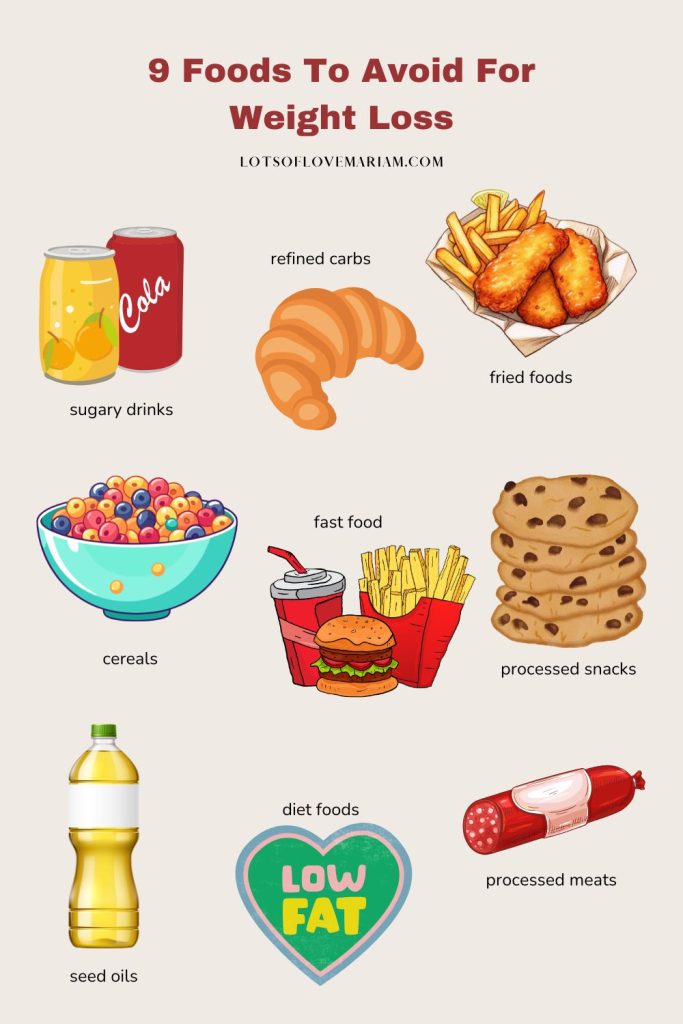
1. Sugary Drinks
Many people don’t realize just how much sugar is hidden in drinks like fizzy sodas, fruit juices, energy drinks, and even fruit smoothies. These drinks cause rapid blood sugar spikes, which signal the body to store fat and often lead to cravings and energy crashes. Regularly consuming them can make weight loss more difficult, as excess sugar is quickly converted into fat.
It’s best to swap these for healthier alternatives like water (infused with cucumber or lemon if you wish) or herbal tea. If you enjoy fruit smoothies or smoothie bowls, be mindful of their high natural sugar content. To help stabilize blood sugar levels, make sure you’ve eaten enough protein beforehand, such as Greek yogurt, nuts, or eggs. This will slow down the absorption of sugar and prevent energy crashes, making your smoothie a much better choice for weight loss.
2. Refined Carbs
Refined carbs like pastries, cakes, sugary cereals, and white bread should be avoided or kept to a minimum, ideally making up only 10-20% of your diet (following the 90/10 or 80/20 rule).
These foods cause rapid blood sugar spikes, which lead to energy crashes, increased cravings, and overeating. The quick surge of sugar in your bloodstream triggers a cycle where your body craves even more sugar for energy, making it harder to control hunger and stick to your weight loss goals.
Instead of refined carbs, opt for healthier alternatives like sourdough bread or homemade versions with simple, whole ingredients. For example, if you love bagels, consider making your own high-protein cottage cheese bagels, which contain just a few clean ingredients and provide better nutrition compared to store-bought options loaded with sugar and preservatives.
3. Fried Foods
Fried and processed foods should be avoided as much as possible, especially when cooked in seed oils, which is the case for most fast-food and store-bought fried foods. These oils are packed with unhealthy fats that contribute to inflammation in the body, making it harder to lose weight and maintain overall health.
If you still want to enjoy crispy, flavourful foods, there are healthier ways to prepare them. For example, instead of deep-frying chicken, try pan-frying it in ghee or baking it in the oven. If you’re craving fries, cut up some potatoes into chip shapes, season them, and bake them for a crispy yet nutritious alternative. Making small swaps like these allows you to enjoy your favorite foods while staying on track with your weight loss goals.

This weight loss guide includes every single piece of information you need to start your weight loss journey the right way! This guide includes everything that helped me lose 20kg. join over 200 people who have grabbed theirs to start their journey to a healthier version of themselves!
4. Sugary Cereals
Many cereals and granolas are marketed as “healthy” because they claim to be high in protein or low in calories, but in reality, most are loaded with hidden sugars. These added sugars cause rapid blood sugar spikes, leading to increased insulin levels and more fat storage. Over time, this can also contribute to inflammation in the body, making it harder to lose weight and maintain stable energy levels.
If you enjoy cereal-like breakfasts, a much better alternative is my homemade nutty granola, which is packed with nuts and seeds to help stabilize blood sugar levels. You can even reduce or completely remove the coconut sugar in the recipe for an even healthier option.
Another great choice is Greek yogurt with nuts and berries, which provides protein, healthy fats, and fiber to keep you full and energized without the sugar crashes.
5. Highly Processed Snacks
Snacking was always one of my biggest struggles, especially at the beginning of my weight loss journey. I found it hard to cut down, particularly on processed snacks like biscuits—chocolate digestive biscuits were my weakness!
However, these highly processed snacks are not only low in nutrients but also packed with sugar, which leads to fat storage, especially around the belly. The constant sugar spikes from these snacks also make it harder to control cravings and maintain steady energy levels throughout the day.
Instead of reaching for processed snacks, start making small swaps. Try hummus with veggies, a handful of nuts, or dates with nut butter for a naturally sweet but nutritious alternative. If you’re looking for more ideas, check out my blog post on 11 Healthy Snack Alternatives to help you make better choices next time you’re craving a snack!
Other Weight Loss Posts You’ll Find Helpful:
- What Is The Most Effective Way To Lose Weight
- How to Track Weight Loss Without A Scale
- 6 Causes Of Sugar Cravings
6. Seed Oils
Many people cook and fry with seed oils like sunflower oil, vegetable oil, and canola oil because they’re widely available and commonly used in packaged foods. However, these oils are highly processed and can negatively impact your gut health, leading to inflammation, which makes weight and fat loss more difficult.
Since the gut plays a crucial role in metabolism, digestion, and hormone regulation, an unhealthy gut can stall progress, especially if you’re trying to lose belly fat and improve overall health and wellness.
Instead, swap seed oils for healthier fats like grass-fed butter, ghee, coconut oil, avocado oil, or extra virgin olive oil. These options provide essential nutrients and help stabilize blood sugar levels, keeping hunger and cravings in check. Using healthier fats in your diet supports sustainable weight loss, improves gut health, and helps reduce stomach bloating and fat storage.
7. Fast Food
I used to love a good burger or pizza, and it became a habit to order takeout twice a week—then we eventually cut it down to once a week. However, when I started taking my weight loss journey more seriously, I realized I needed to find a way to enjoy these foods without feeling restricted while also saving some money.
Takeout and fast food are typically high in refined carbs, unhealthy fats, and sodium, which can lead to increased water retention and fat storage, especially around the belly.
Instead of giving up your favorite meals, consider making your own “fakeaways.” If you typically order takeout on Saturdays, why not try making your own homemade pizza or burger? This way, you can enjoy the flavours you love while controlling the ingredients. For example, use beef mince and fry your patties in ghee instead of the unhealthy sunflower oil most restaurants use.
Homemade burgers are packed with nutrients from fresh, quality ingredients—unlike the highly processed beef patties often found in takeout. Making small changes like these helps you stay on track with your weight loss goals while still indulging in your favorite comfort foods.
8. Diet Foods
When starting a weight loss journey, many people turn to “diet foods” as a quick fix. Trust me, I’ve been there too! I used to buy plant-based butters, low-fat yogurts, and low-calorie snacks—all of which were marketed as healthy but were actually highly processed.
These products may seem like a good option, but they can increase cravings, promote fat storage, disrupt gut health, and ultimately lead to overeating. Common examples of diet foods include:
- “Sugar-Free” or “Low-Fat” Yogurt (often packed with artificial sweeteners)
- Diet Sodas & Sugar-Free Energy Drinks (contain artificial sweeteners that trigger cravings)
- Low-Calorie Ice Creams & Desserts (use artificial sweeteners and processed ingredients)
- Protein Bars & Meal Replacement Shakes (often filled with sugar alcohols like maltitol, which cause bloating)
- Packaged “Keto” or “Low-Carb” Snacks (may contain hidden additives, unhealthy oils, and artificial sweeteners)
Instead of relying on processed foods, focus on eating whole foods, even if they are higher in calories. The truth is, calories are not equal—a higher-calorie meal made with wholesome ingredients will support your weight loss and overall health much better than processed low-calorie alternatives.
For example, a Greek yogurt bowl with fresh fruit and nuts may be over 300 calories, but it will keep you full, stabilize your blood sugar levels, and help improve metabolism due to its high protein content. On the other hand, a 100-calorie snack bar may seem like the “better” choice, but it likely contains artificial sweeteners and excessive fructose, which is more damaging than glucose and leads to fat storage in the body.
Choosing whole foods over low-calorie diet products helps you stay satisfied, support your metabolism, and make sustainable progress in your weight loss journey.
9. Processed Meats
Deli meats have always been one of my weaknesses, and honestly, I still enjoy them from time to time. However, processed meats like sausages, bacon, and deli meats should be avoided as much as possible. They are packed with high levels of sodium, preservatives, and unhealthy fats that can contribute to inflammation, water retention, and fat storage.
Instead of reaching for these processed options, opt for real, whole protein sources like fresh chicken, turkey, or lean cuts of beef. These choices are not only more nutritious, but they also support your body’s natural fat-burning processes without the added harmful chemicals and excessive sodium.
Making the switch to real meats can make a significant difference in your weight loss journey while improving your overall health.
This post was all about foods to avoid for weight loss!
Don’t forget to save this pin on Pinterest to come back to later!
This post may contain affiliate links, which means I’ll receive a commission if you purchase through my link, at no extra cost to you. Any purchases made through Affiliate links are massively appreciated as they help to support the blog and continue its production. Please read the full disclosure here.

Leave a Reply