7 Foods to avoid during Suhoor, plus what to eat instead to stay full, energised, and hydrated throughout fasting hours.
Choosing the right foods for suhoor can make a huge difference to how you feel during your fast. The wrong choices can leave you feeling thirsty, bloated, tired, and starving just a few hours in. Balanced meals help you stay full, energised, and focused for much longer.
When I started prioritising the right foods at suhoor time, it completely changed my fasting experience. My digestion improved, my energy levels were more stable throughout the day, I rarely felt thirsty, and I hardly experienced hunger during fasting hours. I went from having cereal or just dates for suhoor to enjoying a full, savoury, high-protein meal that actually kept me full.
That’s why I decided to write this blog post — to share the foods to avoid during suhoor and a simple guide on what to eat for suhoor to stay full, so you can plan your meals more intentionally and feel your best throughout Ramadan.
This post is all about foods to avoid during suhoor!
Don’t forget to save this pin on foods to avoid during suhoor for later reference!

Foods To Avoid During Suhoor
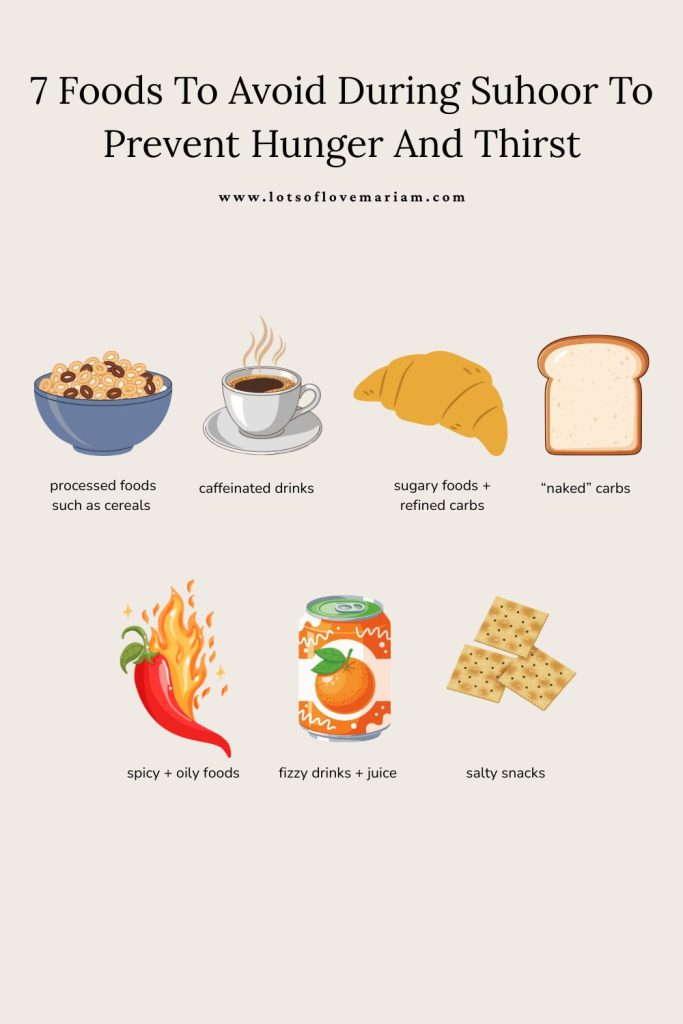
1. Processed Foods
Processed foods are often low in nutrients and high in sodium, unhealthy fats, and added sugars. These foods can increase thirst and leave you feeling hungry much sooner during your fast.
Examples include:
- Ready meals
- Processed meats
- Packaged breakfast foods such as cereal or breakfast bars
2. Caffeinated Drinks
Caffeinated drinks increase urine production, which can lead to dehydration while fasting. I know letting go of caffeinated drinks such as coffee or tea can be really hard during Ramadan, but it is best to completely avoid them during Suhoor.
Examples include:
- Coffee
- Energy drinks
- Strong tea
If you enjoy a warm drink, herbal teas such as peppermint tea are a better option.
3. Sugary Foods And Refined Carbs
Sugary foods and refined carbs may seem like they’ll give you quick energy, but they actually cause a rapid blood sugar spike followed by a crash. This can leave you feeling tired, low in energy, and extremely hungry later in the day.
Examples include:
- Cakes and pastries
- Store-bought granola
- White bread
4. “Naked” Carbs
Naked carbs are carbs eaten on their own without protein or healthy fats. This causes blood sugar levels to spike quickly and drop just as fast, leading to hunger and low energy.
An example would be just eating toast with butter and jam. Instead, add some mashed avocados to your toast with a side of eggs and sauteed tomatoes.
Pairing carbs with protein, healthy fats, and fibre helps stabilise blood sugar levels and keeps you fuller for longer.
5. Spicy And Oily Foods
Spicy and oily foods, while common in many cultures, can cause indigestion, bloating, gastric irritation, and increased thirst during fasting.
These foods can make the fast feel much harder than it needs to be.
6. Fizzy Drinks
Fizzy drinks can cause bloating and contribute to dehydration. They also offer little to no nutritional value.
If you want a flavoured drink, a good-quality electrolyte can be a better option (for example, Humantra). I love having this during Ramadan to boost my hydration. They have different flavours, and my top two are lychee and berry pomegranate.

7. Salty Snacks
Salty snacks such as crackers and chips are best avoided during suhoor because their high sodium content increases thirst throughout the day. Excess salt pulls water out of your cells, which can leave you feeling dehydrated much earlier into your fast — even if you’ve had plenty of fluids at suhoor.
Salty, low-nutrient snacks also lack protein, fibre, and healthy fats, meaning they won’t keep you full and can lead to hunger and low energy during fasting hours.
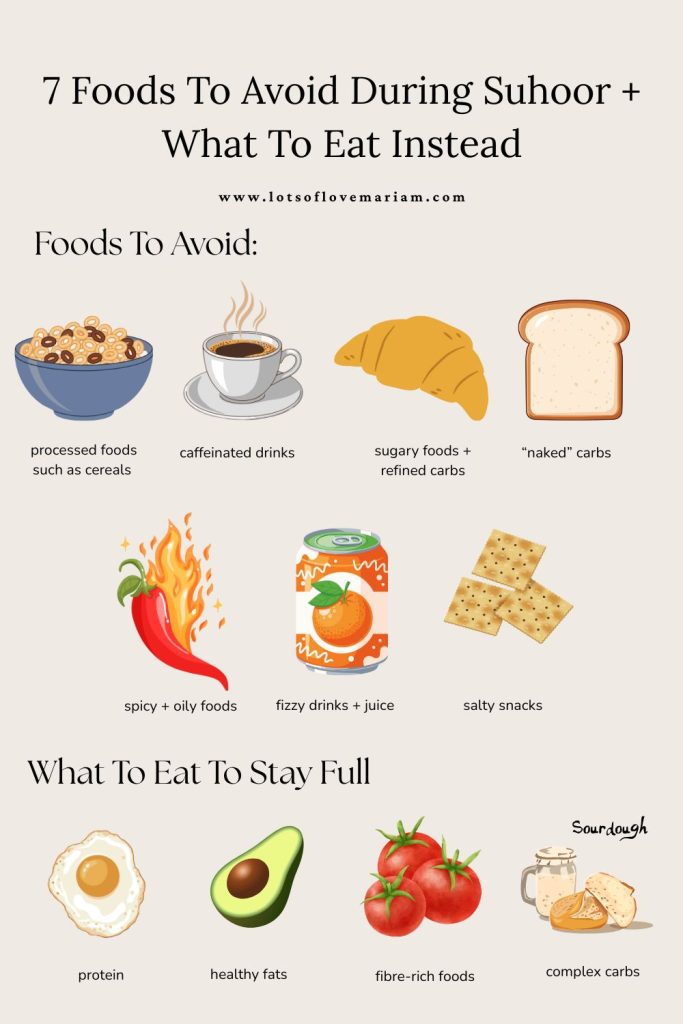
What To Eat For Suhoor To Stay Full
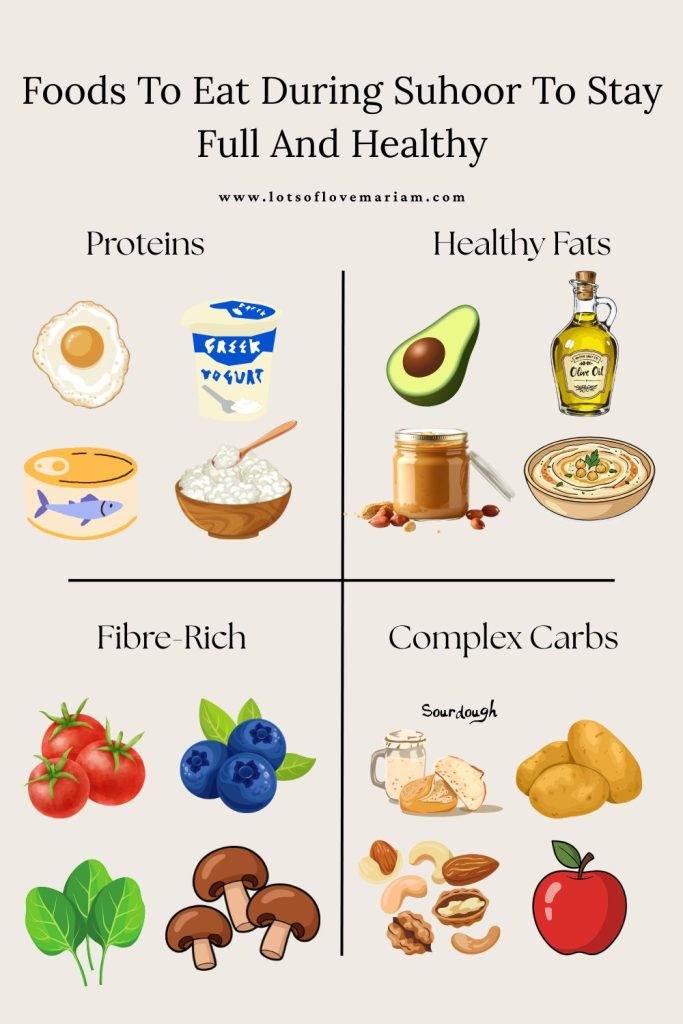
To stay full and energised throughout the fast, focus on protein, healthy fats, fibre, and hydration. If you include carbs, choose complex carbs and always pair them with protein and fats to help stabilise blood sugar levels.
Below are some of the best foods to include in a balanced suhoor.
Protein
Protein helps keep you full for longer and supports steady energy levels.
Good options include:
- Eggs
- Full-fat Greek yogurt
- Chicken, meat, or fish (such as tuna)
- Cottage cheese
Healthy Fats
Healthy fats slow digestion and help you feel satisfied for longer.
Examples include:
- Avocados
- Nuts and seeds (unsalted)
- Extra virgin olive oil (for example, drizzled over eggs)
- Olives
- Nut butters (almond or cashew butter)
- Hummus (try my homemade hummus recipe)
Fibre-Rich Foods
Fibre supports digestion and helps keep you feeling full.
Examples include:
- Berries
- Tomatoes
- Leafy greens such as spinach
Complex Carbs
Complex carbs digest more slowly and provide longer-lasting energy, especially when paired with protein and healthy fats.
Best options for suhoor include:
- Sourdough bread (lower GI and slower digestion)
- Organic jumbo oats or steel-cut oats (low GI — just be sure to pair them with protein and fats)
Need Some Healthy Suhoor Ideas?
If you’re not sure how to put all of this together, I’ve shared 11 healthy and filling suhoor ideas that will help you stay full, energised, and satisfied throughout your fast.
Other Ramadan Posts For A Healthy Ramadan:
- 35 Healthy Ramadan Recipes
- 20 Healthy Iftar Recipes
- A Guide To Stay Hydrated During Ramadan
- 30 Day Ramadan Workout Plan
This post was all about foods to avoid during Suhoor!
Don’t forget to save this pin on Pinterest to come back to later!
This post may contain affiliate links, which means I’ll receive a commission if you purchase through my link, at no extra cost to you. Any purchases made through Affiliate links are massively appreciated as they help to support the blog and continue its production. Please read the full disclosure here.

Leave a Reply