Learn how to improve sleep quality with our sleep hygiene checklist. Discover tips and habits to enhance your rest and wake up feeling refreshed.

The quality of your sleep plays a vital role in maintaining overall health and wellness. It allows your body to repair, supports brain function, and helps regulate emotions. Yet, many people struggle with achieving consistent, high-quality sleep, which negatively impacts both mental and physical health.
Poor sleep can lead to constant fatigue, difficulty concentrating, irritability, and long-term issues like weakened immunity and weight gain. If you’re constantly craving sugar, that too may be tied to poor sleep, potentially leading to other health concerns such as diabetes.
In today’s world, stress, irregular schedules, and excessive screen time make it harder for people to maintain good sleep habits. More and more individuals wake up feeling unrested, and many have difficulty falling asleep to begin with.
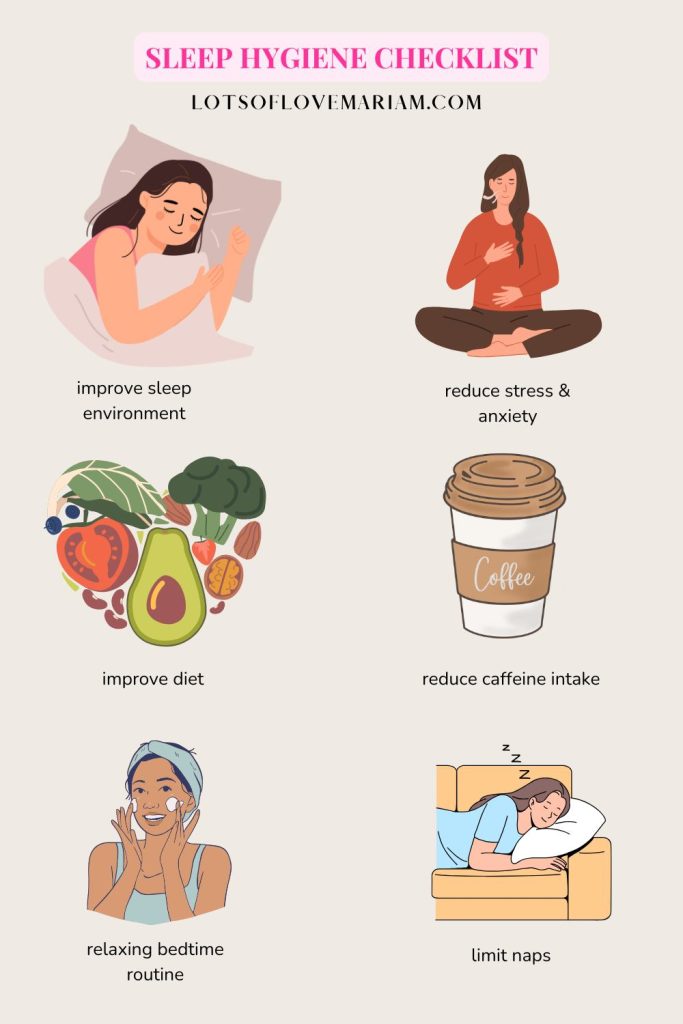
This post will provide you with a sleep hygiene checklist to help you improve your sleep quality. From establishing a consistent bedtime routine to creating a sleep-friendly environment, these strategies will help you wake up refreshed and ready to take on the day. Whether you want to boost your energy, improve focus, or enhance your overall health, improving your sleep is a critical first step.
This post is all about how to improve sleep quality.
Don’t forget to save this pin on how to improve sleep quality to come back to later!

Why Sleep Quality Matters
Getting quality sleep is essential for improving your overall health. Whether you’re focusing on mental well-being or weight loss, improving your sleep is a crucial step.
Poor sleep can lead to weakened immunity, increased stress, unhealthy weight gain, and a higher risk of chronic conditions like obesity. Adults typically need over 7 hours of sleep, though women often require 9-10 hours due to various factors.
Here are some key benefits of good quality sleep:
- Improved Cognitive Function: Enhances memory, concentration, and decision-making.
- Better Mood: Reduces anxiety, and irritability, and promotes emotional stability.
- Stronger Immune System: Supports body repair and reduces the risk of illness.
- Better Physical Health: Lowers blood pressure, reduces inflammation, and aids recovery.
- Weight Management: Regulates hunger hormones, making it easier to maintain a healthy weight.
- Balanced Hormones: Helps reduce stress hormones like cortisol, which can store fat, especially around the belly.
- Increased Productivity: Boosts energy, creativity, and efficiency.
- Better Skin: Supports repair processes, promoting healthier, glowing skin.
How To Sleep Better At Night Naturally
Sleep Hygiene Checklist
1. Sleep Environment
Your sleep environment plays a huge role in the quality of your rest, and making a few simple changes can make a big difference. For example, blackout curtains are great for blocking out light—there are even stick-on versions that we originally got for our daughter as a baby, but now we use them too because they improve my sleep so much.
A white noise machine can be a game-changer if noise is an issue. We got one for our daughter, but I found it helps me sleep better too! A white noise can help block out noise and help you get into deep sleep.
Other ways to optimize your bedroom include investing in a high-quality mattress and pillows to ensure you’re as comfortable as possible.
2. Improving Stress & Mental Health
High levels of stress and anxiety can seriously disrupt sleep. If you find yourself taking longer to fall asleep or waking up between 2 and 4 a.m., this could be a sign of stress. Incorporating relaxation techniques into your bedtime routine can be very effective in improving sleep quality by reducing stress over time.
For instance, deep breathing exercises or guided meditations (I personally use a 5-minute stress relief meditation on my most stressful days, and it works wonders) can help calm your mind.
Journaling is also a great way to process emotions and ease anxiety—writing down your thoughts helps release worries, while gratitude journaling reminds you of positive experiences, promoting a calmer mindset before bed.
3. Diet & Caffeine
Too much caffeine and certain foods can significantly impact your sleep quality. While it’s commonly advised to avoid caffeine a few hours before bed, I recommend cutting off caffeine after 12 p.m. to ensure better rest. Instead, opt for calming drinks like peppermint or chamomile tea before bed—peppermint is my personal favorite.
Avoid heavy meals close to bedtime as well; it’s best to stop eating at least 2-3 hours before sleep.
Here is a list of food for good sleep:
- Almonds
- Bananas (Try my favorite banana split: slice a banana, add 2 tbsp of full-fat Greek yogurt, top with nuts and blueberries—great for stabilizing blood sugar too!)
- Kiwi
- Warm milk
- Chamomile tea
- Walnuts
- Turkey
- Jumbo oats
- Tart cherries
- Full-fat plain Greek yogurt or natural yogurt
So if you drink too much caffeinated drinks and eat heavy meals before sleep and are wondering how to improve sleep quality, then now you know how!
4. Consistent Sleep Schedule
Maintaining a consistent sleep and wake schedule—going to bed and waking up at the same time every day—is essential for regulating your body’s internal clock, or circadian rhythm. This routine helps your body anticipate sleep, making it easier to fall asleep quickly and stay asleep throughout the night.
t’s recommended to aim for a 10 p.m. bedtime each day. If you tend to sleep later, my best tip is to gradually adjust by going to bed 15 minutes earlier each night until a 10 p.m. bedtime becomes a natural habit. As a result, waking up earlier will also start to feel easier and more natural.
5. Relaxing Bedtime Routine
Establishing a relaxing pre-sleep routine, like reading or light stretching, can help reinforce a consistent sleep schedule. This routine signals to your body that it’s time to wind down and prepare for rest. Here are a few must-do activities to add to your bedtime routine for better sleep quality:
- Avoid screens for 30 minutes to 1 hour before bed (I find 1 hour works best for me).
- Engage in a calming activity to reduce stress and anxiety, such as journaling, deep breathing, or reading.
- Taking a warm shower can also help relax your body and significantly improve your sleep quality.
Full night routine checklist.
6. Limit Screen Time
Blue light (from screens) suppresses melatonin, the hormone that signals your body to prepare for sleep, making it harder to fall asleep. Evening exposure to blue light tricks your brain into thinking it’s still daytime, delaying sleepiness and disrupting your circadian rhythm.
I’ve noticed that if I turn off the TV or stop using my phone only 10-20 minutes before bed, it can take me up to 1-2 hours to fall asleep! To avoid this, try staying off screens at least an hour before bed and use that time to unwind with relaxation techniques instead.
7. Limit Naps
If you enjoy taking naps, it’s best to avoid napping after 3 p.m. The ideal window for naps is between 1-2 p.m., which aligns with your body’s natural energy dip and minimizes the chances of disrupting your nighttime sleep.
Keep your naps short—around 20 minutes—to ensure you don’t interfere with your ability to fall asleep at night when it’s time to rest.
This post was all about how to improve sleep quality!
Don’t forget to save this pin on Pinterest to come back to later!
This post may contain affiliate links, which means I’ll receive a commission if you purchase through my link, at no extra cost to you. Any purchases made through Affiliate links are massively appreciated as they help to support the blog and continue its production. Please read the full disclosure here.

Leave a Reply